Almost everyone interested in psychology, sociology, or management is familiar with the concept of expectation management. However, disappointment, the risk of which is an integral part of achieving high results, does not receive the same attention. Disappointment is a complex emotion associated with negative feelings such as sadness, frustration, and irritation, which manifest in various forms and intensities.
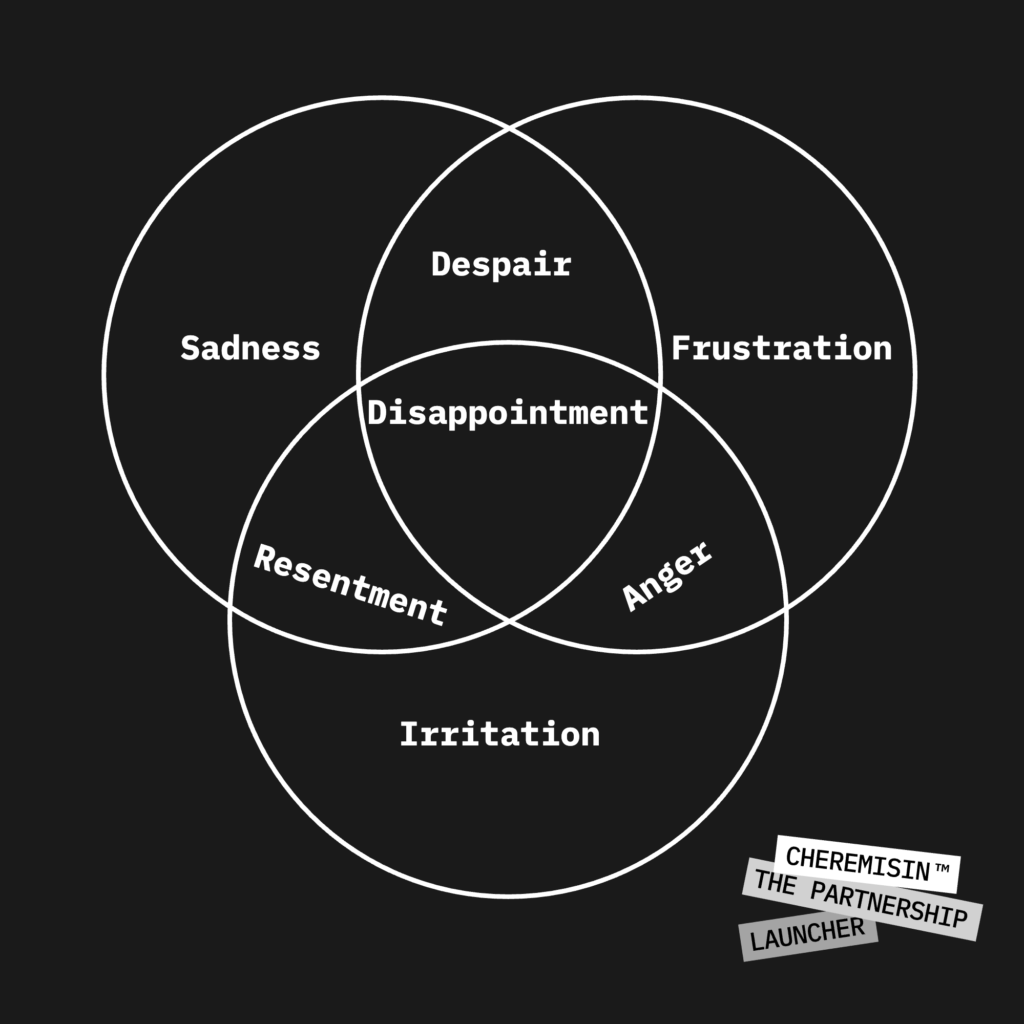
These negative feelings lead to resentment, anger, or despair, which in turn trigger the “four horsemen of the apocalypse” that destroy relationships: contempt, criticism, stonewalling, and threats. A chain reaction begins, with one emotion flowing into another, behavioral patterns changing one after another, and it is often difficult to stop it.
Overall, disappointment is a dangerous thing, and for the successful development of a business partnership, all members of the partnership group must understand what can cause disappointment, what conditions need to be created to prevent it, and that disappointment needs to be managed.
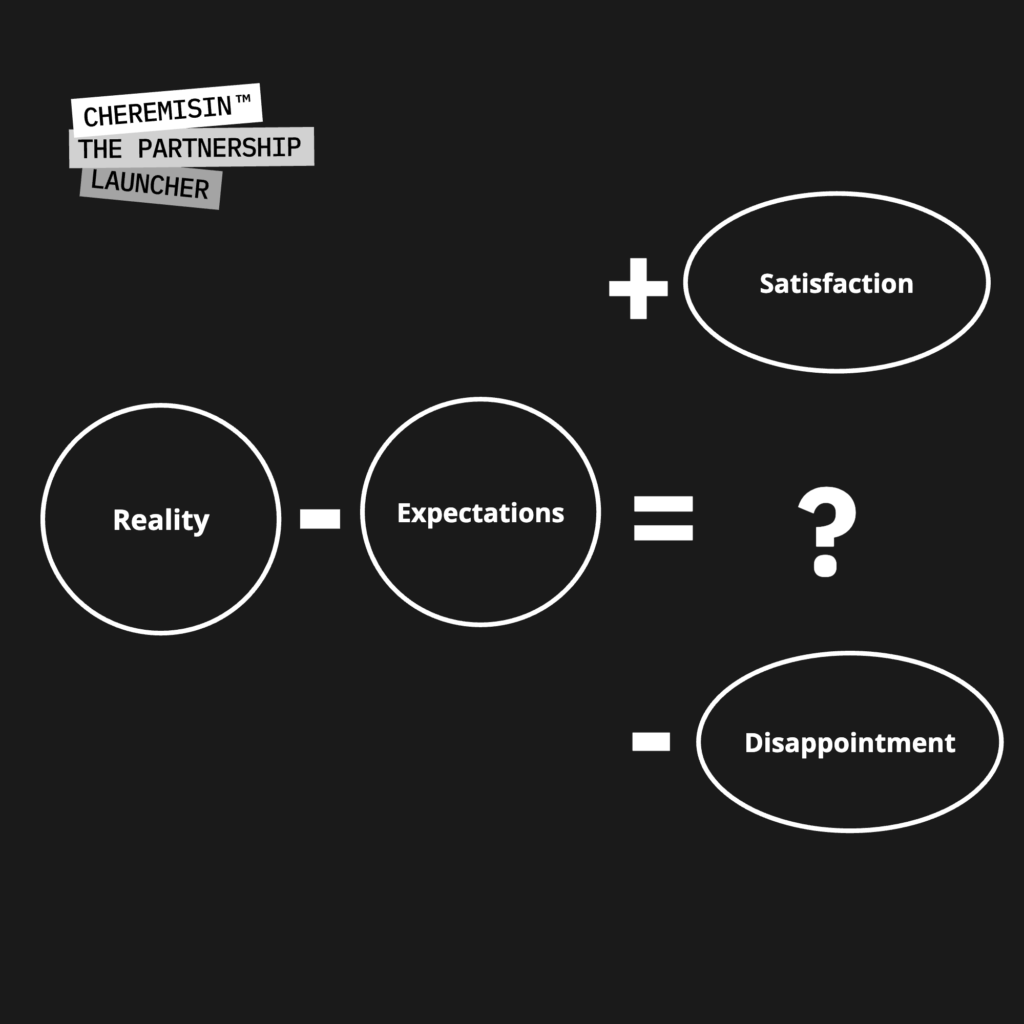
The quality of partnership relations is determined by the ability of partners to engage each other, managing not only expectations but also disappointments. To manage disappointment, it is necessary to understand the process of its occurrence. In short, disappointment is the negative value of the mathematical operation: expectation minus reality.
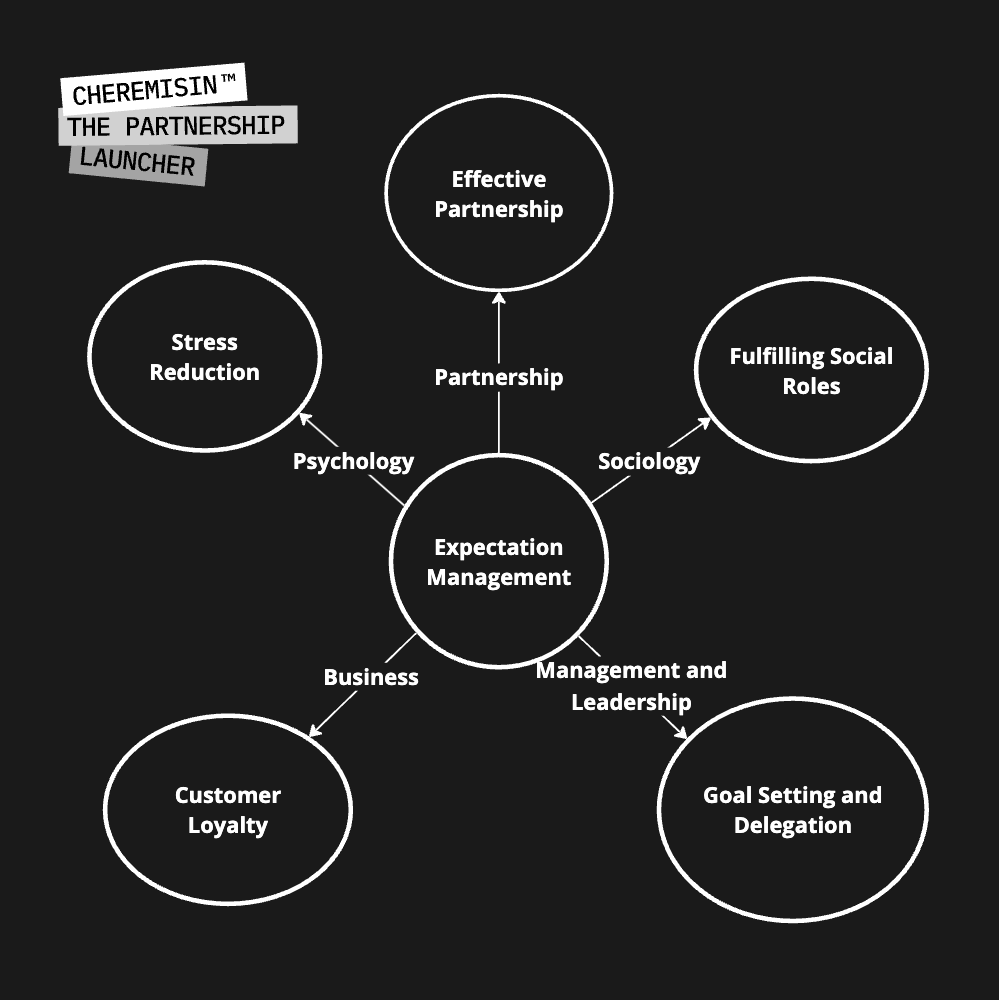
At the heart of disappointment are expectations, so let’s dig a little deeper in this direction. In psychology, building expectations is related to the theory of cognitive dissonance and self-fulfilling prophecies. Clear expectations help reduce uncertainty and stress.
Sociologists study how social norms and roles influence expectations. Building expectations helps people better perform their social roles and interact with each other.
In management and leadership, building expectations is a key element for achieving goals and improving performance. This includes setting clear goals, delegating tasks, and providing feedback.
In partnership theory, clarity and effective communication are especially important for establishing correct expectations and trust between partners.
In business, managing customer and partner expectations plays an important role in satisfaction and loyalty. Clear expectations help avoid misunderstandings and disappointments. Of course, the course of life inevitably leads to a clash with reality, expectations are not met, which often leads to disappointment.
When you are doing business with partners, due to limited resources, customer requirements, or market conditions, situations arise that you cannot control. For example:
- You can’t always invest in a project that one of the partners wants to promote because the company doesn’t have the resources. One of the co-owners may propose an ambitious project to expand the business, while other partners may argue that under current conditions, the company does not have enough capital or resources for this investment.
- You can’t always distribute profits to the extent that your partners expect, due to the company’s current financial performance. During economic or seasonal downturns, one partner may expect to receive their dividends in full, while the business needs to reinvest profits to maintain liquidity.
- You may face the need to redistribute responsibilities and roles among partners due to changing market conditions. For example, a sudden change in legislation may require one partner to focus on a new direction, which can cause disappointment if that partner expected to continue working on their current project.
- You may be forced to cut funding for one business area in favor of another, which will cause disappointment for those partners whose projects suffer. In conditions of a limited budget, owners may decide to prioritize the most profitable business area to the detriment of less promising projects or areas.
In such situations, the ability to identify, mitigate, and manage disappointment among partners is required. And, as experience shows, such situations occur constantly.
A business partnership is a constant balance between mutual support in achieving common goals and resistance to reality, which counteracts their implementation.
Let’s look at how disappointment arises and how its potential grows.
- A partner takes on the role of a shock absorber, hiding the real state of affairs from you. One partner may hide information about the company’s financial difficulties to avoid worrying another partner and avoid a difficult conversation about the need to make tough decisions such as cutting costs or personnel.
- A partner creates an illusion of control over a situation that they cannot actually control, often without realizing it. A partner claims that the joint project is going according to plan and everything is under control, even if there are significant risks and deadline delays are inevitable. This may be done with the best intentions. However, a meeting with reality can cause shock and fundamentally undermine trust.
- A partner promises more than they can deliver to satisfy the partner’s expectations or motivate them. To maintain enthusiasm and satisfaction, a partner may promise high returns from the implementation of a new product or assure the successful implementation of an innovative idea.
The list goes on. Understanding the logic of the buildup of disappointment is key to successfully running a business and maintaining harmony in partnership relations.
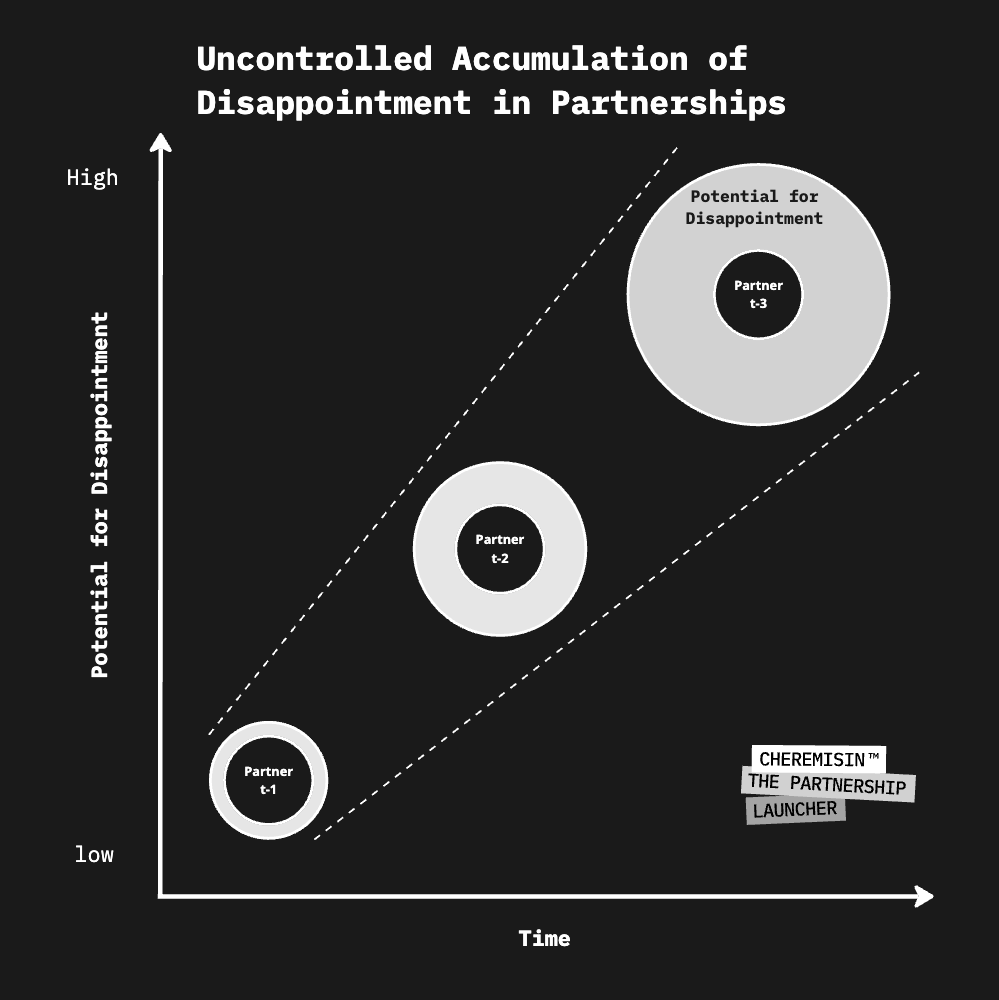
Managing disappointment is a mutual, systematic immersion of a partner into the context of what is happening: the closer expectations are to reality, the lower the potential for disappointment. The key tool in reducing the potential for disappointment is communication — systematic mutual immersion in the context of what is happening in each other’s areas of responsibility.
It is necessary to bring transparency regarding what is happening in the team, with clients, and in the company as a whole. All this creates a context that helps partners make more informed decisions. There should be no surprises or omissions. For example: if changes in the area of responsibility of an individual partner jeopardize the achievement of the company’s performance targets, some co-owners may postpone discussing such a situation with other partners until the issue is resolved, “so as not to worry them and distract them from current tasks.” This is a mistake! A partner skilled in partnership can promptly explain to others that circumstances have changed, and at any moment it is necessary to be ready for action.
The ability to communicate emerging problems in a timely manner guarantees that partners and the company as a whole will always spend their resources on the most important tasks.
The next crucial element of managing disappointment is cooperation — the ability to take responsibility for what the partner can control and bring issues to joint discussion where unilateral control or decision-making is impossible.
If you control the process or make a decision, be transparent in your actions. When a problem arises, “hiding” makes no sense; it will not protect you from the problem or the need to solve it later together with all the partners.
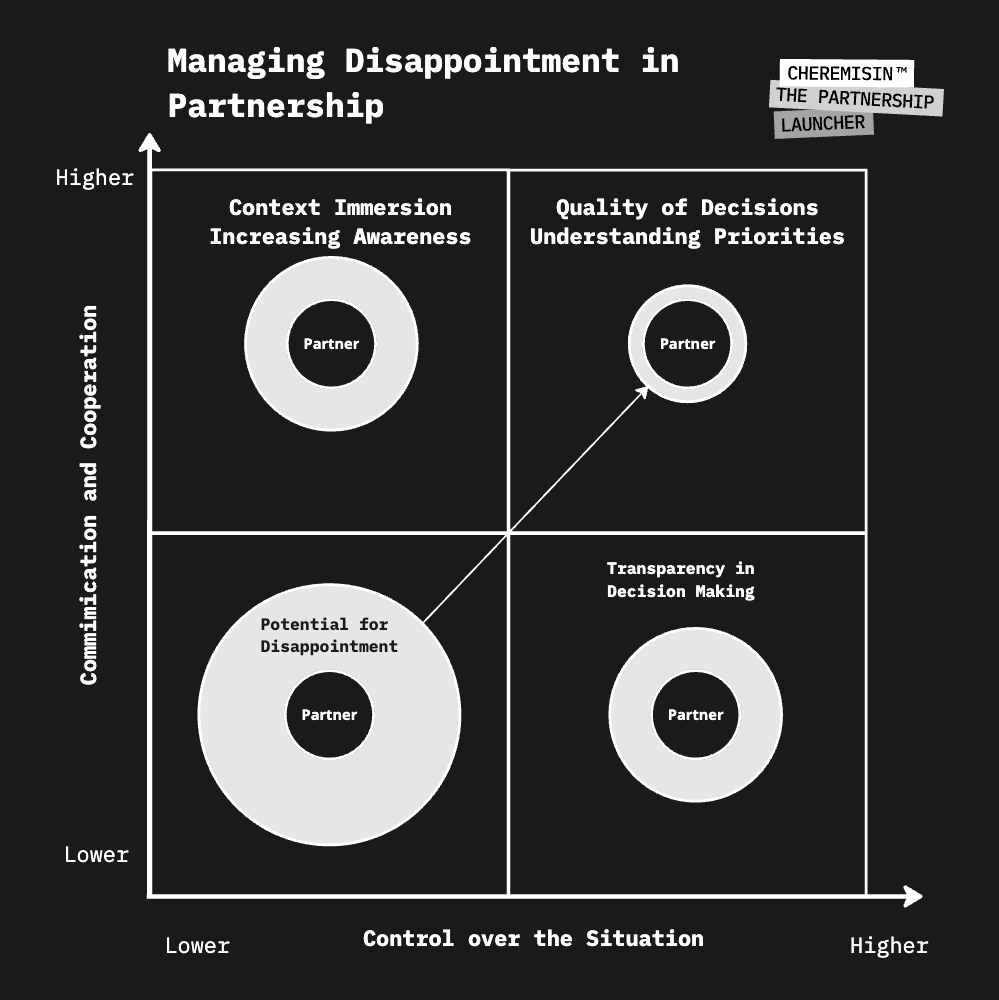
Partners will surely appreciate honesty, openness, and the opportunity to discuss the situation directly, which will significantly reduce disappointment and its depth.
This approach allows you to become a leader in resolving a difficult situation, rather than its source: the resulting disappointment will be directed at the situation, not at one of the partners. If it is pre-agreed that the area where the problem arose is beyond your control, it is not your fault.
No one is immune from problems or mistakes; no one can control and solve everything. The task of each partner is to help each other navigate each other’s areas of expertise and integrate cooperation and communication into the cultural code of relationships.